
Trump, Opioids, and Marijuana: What the New Executive Order Really Means (and Why Hemp Businesses Should Pay Attention)
Donald Trump just said medical marijuana can replace addictive opioids.
That sentence alone probably made you pause. Maybe you reread it. Maybe you wondered if it was clipped out of context. Maybe you shrugged and thought, Well, politics is weird now.
But it’s real. And it matters.
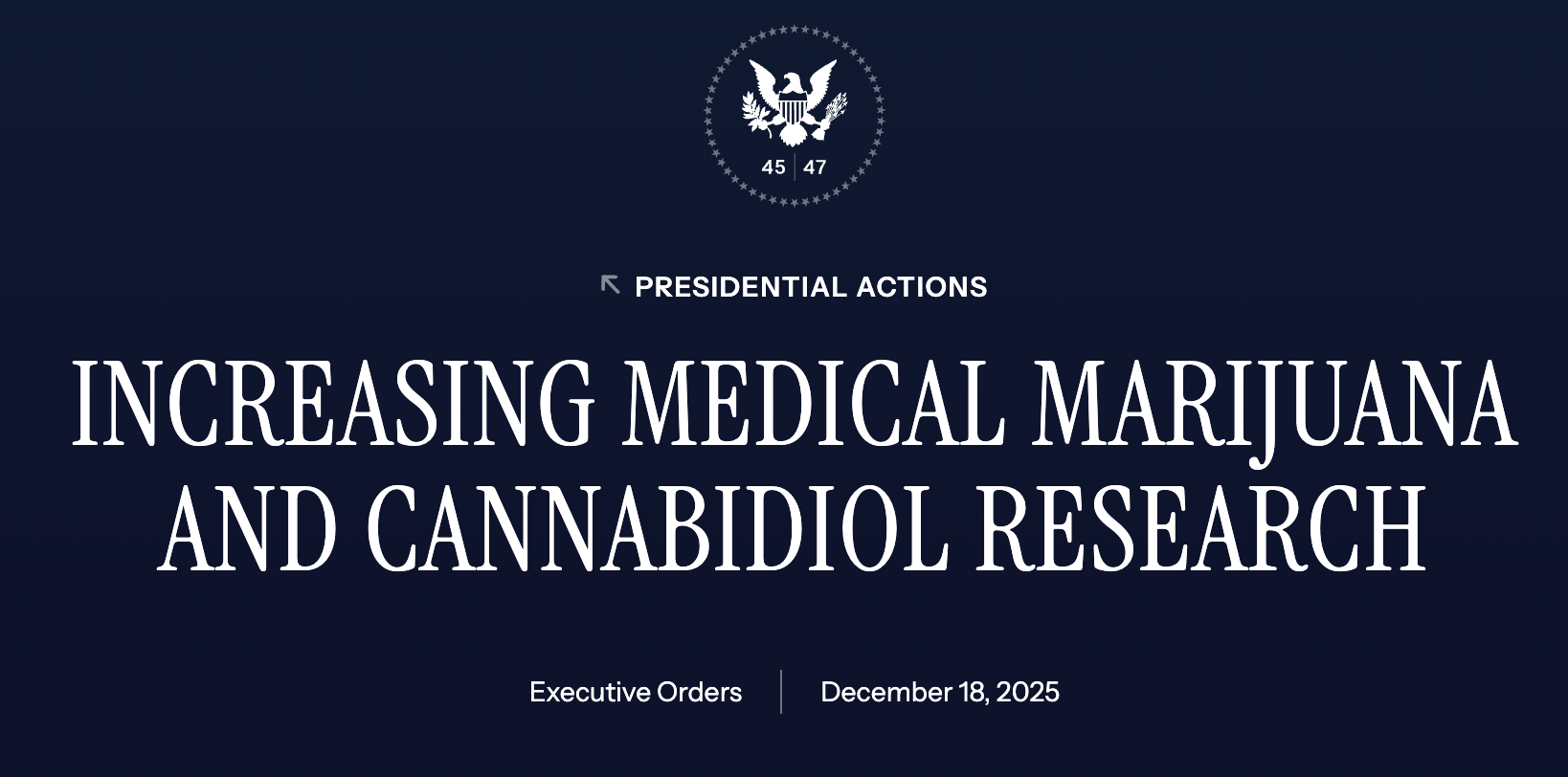
On December 18th, the White House issued an executive order that quietly does something the federal government has resisted for decades: it openly acknowledges that marijuana has legitimate medical use and that federal policy has actively held research back. And we’re not talking just slowing down or complicating the research. We mean completely blocked it.
At the same time, the order pulls CBD and hemp-derived cannabinoids into the conversation in a way that should make business owners sit up a little straighter. Not because everything is suddenly legal. Quite the opposite. Because the government is finally admitting the gap between real-world use and federal law is a problem.
For hemp and marijuana businesses, that gap is where things go wrong.
Let’s talk about what actually changed, what didn’t, and why this moment feels bigger than it looks on paper.
A Headline Nobody Expected — But Here We Are
At the signing event, President Trump said medical marijuana can serve as a substitute for addictive and potentially lethal opioid painkillers. He also made a point of saying he has no interest in using marijuana himself. That detail feels almost beside the point, but it tells you something about how this moment came together.
This wasn’t a cultural endorsement. It wasn’t a lifestyle pivot. It was framed as a public health issue.
Opioids have wrecked families, communities, and entire regions of the country. That’s not controversial anymore. What is controversial, at least in federal law, is acknowledging that cannabis may reduce reliance on them. Trump didn’t hedge much. He said the facts compelled action.
That framing matters because it explains why the executive order looks the way it does. It’s about research, classification, and federal agencies finally being told to stop pretending marijuana has no medical value.
What Actually Happened This Week
The executive order, titled “Increasing Medical Marijuana and Cannabidiol Research,” does a few key things that are easy to miss if you only read the headlines.
First, it formally states that decades of federal drug policy neglected marijuana’s medical uses.
Second, it pushes the Department of Justice to complete the process of moving marijuana from Schedule I to Schedule III under the Controlled Substances Act. That process started earlier, but this order applies pressure to finish it.
Third, and this is where hemp businesses should really pay attention, it directs multiple federal health agencies — including the FDA, NIH, CMS, and HHS — to develop research models using real-world evidence to study marijuana and hemp-derived cannabinoids, including CBD.
Still, none of this legalizes federally marijuana. The order goes out of its way to say that.
Which brings us to the first big misconception.
Rescheduling Is Not Legalization (Say It Again)
Rescheduling marijuana from Schedule I to Schedule III would be significant. It acknowledges accepted medical use, loosens research barriers, and changes tax treatment for marijuana businesses.
But it does not make marijuana legal at the federal level.
States still control medical and adult-use programs. Federal criminal law still exists. Interstate commerce is still a mess. Banking issues don’t magically disappear. And hemp businesses do not suddenly get a free pass because marijuana moved schedules.
This distinction is already getting lost online, which is predictable. Rescheduling sounds like progress, so people assume legalization is right behind it. Well, maybe someday. But not today.
And for hemp operators, the risk is assuming the government finally agrees with you.
Agreement doesn’t equal clarity, and it does often come before enforcement.
The CBD Piece That Didn’t Get the Headlines
Most coverage focused on marijuana. That’s understandable. But the executive order spends real time on hemp-derived cannabinoids, especially CBD.
Here’s why.
CBD use is already widespread. One in five U.S. adults reported using CBD in the past year. Among seniors, it’s closer to fifteen percent. Many people use it for pain, sleep, anxiety, or inflammation. Some talk to their doctors, but many don’t.
The order acknowledges that reality. It also acknowledges something regulators rarely say directly: labeling in the CBD market is inconsistent, sometimes inaccurate, and potentially risky.
That’s not an attack on hemp. It’s an admission that the regulatory framework never caught up with demand.
The order even flags that some hemp-derived products will once again be considered marijuana under the Controlled Substances Act when certain statutory provisions take effect. That sentence alone should make manufacturers reread their COAs.
Why CMS Showing Up Is a Big Deal (Even Without Coverage)
One of the quieter but more important details in the executive order is the inclusion of the Centers for Medicare & Medicaid Services.
No, Medicare does not cover CBD. Not now, not automatically, and not because of this order.
But CMS being tasked with helping develop research models is a signal. It means the federal government is thinking about populations that rely heavily on Medicare and Medicaid such as seniors, veterans, and -people with chronic pain and multiple prescriptions.
That matters because those populations are already using CBD and medical marijuana, often without guidance. The order cites surveys showing that only about half of older Americans using marijuana discuss it with their healthcare providers.
That’s a safety issue. Drug interactions are real. Dosing and product consistency matters.
From a business standpoint, it also means scrutiny is coming. Research tends to precede standards. Standards tend to precede enforcement.
If you sell into this market, pretending federal agencies aren’t paying attention anymore would be a mistake.
A Market That Moved Faster Than the Law
This part feels obvious, but it’s worth sitting with. People didn’t wait for Washington. They used cannabis for pain because opioids scared them. They used CBD because they wanted relief without intoxication. Sometimes they trusted friends more than doctors.
The federal government now admits it failed to keep up. Research was restricted while usage exploded. That’s not just a policy failure—it's a regulatory one.
And regulatory gaps don’t stay gaps forever. They close. Usually abruptly.
We’ve seen this before in hemp. A product sells nationwide for years. Retailers build shelves around it. Then a rule changes. Or a state reinterprets an existing rule. Suddenly everyone scrambles.
This executive order doesn’t cause that problem, but it acknowledges it.
That’s progress, but it’s also a warning.
Why Business Owners Should Be Calm — Not Comfortable
There’s a temptation to celebrate moments like this. To see the arc bending and assume smoother days are ahead.
Maybe. But this order reads less like a victory lap and more like a catch-up sprint.
Federal agencies are being told to study real-world use. That means asking uncomfortable questions. How much THC is actually in products? How consistent are labels? Who’s consuming what, and alongside which medications?
If you’re confident in your compliance, that’s fine. If you’ve been skating by on assumptions, this is the moment to slow down. Not panic... just pause.
So Where Does This Leave Us?
In a familiar place, honestly.
Science is moving forward, public opinion is already there, and the law is still catching up. That doesn’t mean the industry is doomed.
For hemp and marijuana businesses, the takeaway isn’t that everything just got easier. It’s that pretending federal law is irrelevant is getting riskier.
The government has finally admitted what consumers have known for years. That admission changes the conversation. It doesn’t end it.
And if you’re asking, “How is this allowed but still not clearly regulated?” — you’re not behind.
You’re paying attention.
Want to Stay Ahead of This Instead of Reacting to It?
This executive order is a signal, not a finish line. Federal agencies are paying attention. Research is expanding, and the gap between what people are using and what the law clearly allows is shrinking fast.
If you operate anywhere in hemp, cannabinoids, or marijuana, now is not the moment to guess.
Follow Hemp Law Group on social media to stay current as this unfolds. We break down what’s changing, what’s noise, and what actually affects your business — without hype or wishful thinking.
And if you want to talk this through directly: Clint Palmer is offering free 15-minute strategy calls for hemp and cannabis businesses that want to understand how this executive order, rescheduling efforts, and increased CBD scrutiny could impact them.
This article is for informational purposes only and does not constitute legal advice. Hemp regulations vary by state and change frequently. Consult with a qualified attorney for guidance specific to your situation.
Ready to protect your hemp business?
Let’s ensure your compliance and legal needs are covered.
